
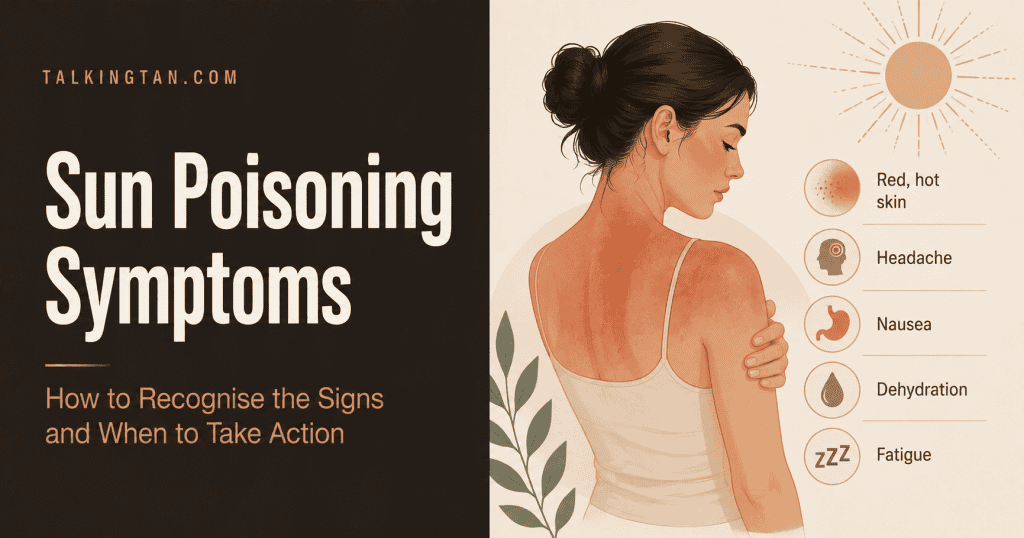
Sun poisoning is an informal term people often use for a severe sunburn that comes with more than red, sore skin. Blistering, intense pain, swelling, fever, chills, nausea, dizziness, or feeling faint can all be signs that the burn—or a heat-related illness happening alongside it—needs medical attention.
If you have confusion, fainting, trouble breathing, repeated vomiting, severe dehydration, or a very high fever after being in the sun, seek urgent medical care now. This guide can help you recognize the symptoms, but it cannot diagnose the cause of them.
Key Takeaways
- “Sun poisoning” is not a formal medical diagnosis; it usually describes a severe reaction to UV exposure.
- Red, hot, painful skin and swelling may progress to widespread blisters, peeling, and severe discomfort.
- Feeling sick—such as nausea, headache, chills, dizziness, or weakness—can signal dehydration or heat illness as well as a severe sunburn.
- Get out of the sun immediately, cool the skin gently, and drink fluids if you can keep them down.
- Do not pop blisters. They help protect healing skin from infection.
- Confusion, fainting, breathing difficulty, persistent vomiting, or signs of severe dehydration are reasons to get emergency help.
- Some medicines can make skin more sensitive to sunlight; ask a pharmacist or clinician about your own medication rather than stopping a prescription on your own.
- Preventing another burn matters: repeated sunburns are associated with a higher risk of melanoma.
What are the symptoms of sun poisoning?
Symptoms often begin like an ordinary sunburn: skin becomes red, warm, tender, swollen, or painful after too much UV exposure. With a more severe reaction, the skin symptoms can be more intense and you may feel unwell overall.
Sunburn is an acute inflammatory skin reaction caused by excessive exposure to UV radiation from the sun or artificial sources. [Guerra and Crane, StatPearls, 2026]
Skin symptoms
- Very red, hot, swollen, or intensely painful skin
- Blisters, especially if they are widespread or very painful
- Severe itching or tenderness
- Peeling or wet-looking areas as the burn develops
- A rash that appears after sun exposure
Whole-body symptoms
- Headache, fatigue, or weakness
- Nausea or vomiting
- Fever or chills
- Dizziness, lightheadedness, or fainting
- Extreme thirst, dry mouth, dark urine, or very little urination
- Fast breathing, rapid heartbeat, confusion, or shortness of breath
It is especially important not to brush off symptoms such as confusion, fainting, rapid breathing, or an inability to keep fluids down. They can point to serious dehydration or heat illness, which needs prompt assessment.
What does sun poisoning mean?
Despite the name, the sun does not “poison” you. The phrase is commonly used when a sunburn is severe enough to cause blisters or make someone feel sick. It can also be used loosely for a sun-triggered rash or a reaction made worse by a medication.
That is why it is better to focus on the symptoms than on trying to label the problem yourself. A severe burn, heat exhaustion, heatstroke, an infection, and a photosensitivity reaction can overlap in appearance but do not always need the same care.
What to do if you think you have sun poisoning
Start with the basics straight away, then judge whether your symptoms require a clinician.
- Get out of the sun. Move indoors or into deep shade and cover the affected skin with loose clothing if you need to go back outside.
- Cool the skin gently. Use a cool shower, bath, or clean damp cloth. Avoid harsh scrubbing and do not apply ice directly to burned skin.
- Rehydrate. Sip water or an oral rehydration drink if you are alert and able to drink. Do not delay medical care if you are vomiting, confused, or cannot keep fluids down.
- Leave blisters intact. Popping them increases the chance of infection. Keep the area clean and protect it from friction.
- Use pain relief carefully. An over-the-counter pain reliever may help some adults when used as directed on the label. Check with a pharmacist or clinician first if you are pregnant, have a medical condition, take other medicines, or are treating a child.
- Stop further UV exposure while the skin heals. A fresh burn is not a base tan and should not be exposed again.
When to seek medical help
Contact a healthcare professional promptly if you have a sunburn with a fever, chills, nausea, signs of infection, severe pain, or extensive blistering. Burns that cover a large area of the body, affect a baby or young child, or are not improving also deserve professional advice.
Seek emergency care now for:
- Confusion, fainting, seizures, or difficulty staying awake
- Shortness of breath, chest pain, or rapid breathing
- Repeated vomiting or an inability to drink fluids
- Signs of severe dehydration, such as very little urine, extreme thirst, or severe dizziness
- A temperature of 102°F (39°C) or higher, especially with other heat-illness symptoms
- Pus, spreading redness, or worsening pain around blisters
When in doubt, use local urgent-care or emergency services. If symptoms began after sun exposure but do not seem to fit a straightforward burn, a clinician can also check for a medication-related photosensitivity reaction or another condition.
How long do sun poisoning symptoms last?
A mild sunburn can continue to become more painful and red during the first day, then gradually improve over several days. Peeling often starts later. A severe burn may take longer to heal, particularly when there are blisters or a large area of skin is involved.
The practical rule is not to wait for a set number of days if your symptoms are getting worse. Worsening pain, fever, new drainage from blisters, or ongoing dizziness should be assessed instead of managed at home indefinitely.
Who is more likely to have a severe reaction?
Anyone can get a serious sunburn, including people with darker skin tones. Risk rises when UV exposure is intense, prolonged, or repeated, and when skin is not protected well enough for the conditions.
Other factors can make a reaction more likely or more severe:
- Fair or easily burning skin
- Time near reflective surfaces such as water, sand, or snow
- High UV index, high altitude, or strong sun during the middle of the day
- Cloudy conditions that feel cool but still allow UV exposure
- Some medicines and topical products that increase photosensitivity
- A history of sun-sensitive skin conditions
Some medicines can cause photosensitivity reactions after UV exposure, and established examples include doxycycline, hydrochlorothiazide, naproxen, and amiodarone. [Blakely et al., Drug Safety, 2019]
This is not a complete medication list. If you are taking a prescription or using a new skin treatment, ask a pharmacist or prescriber whether it changes your sun-safety needs.
How to prevent sun poisoning
Prevention is mostly about reducing the UV dose before your skin starts to burn. Use broad-spectrum sunscreen with SPF 30 or higher, apply it as directed, and reapply according to the label—especially after swimming, sweating, or towel drying. Add shade, a hat, sunglasses, and protective clothing rather than relying on sunscreen alone.
Check the UV index before a long outdoor day, and do not assume clouds protect you from a burn. Our guide to tanning when it is cloudy explains why overcast weather can still catch people out.
If you are trying to understand the limits of sunscreen, read can you tan with sunscreen?. A sunscreen can reduce UV exposure, but it is not a reason to stay in strong sun indefinitely.
The UV index guide can help you plan protection around local conditions. If your goal is to avoid getting darker while protecting your skin, see our guide to sunblock options to prevent tanning.
A greater number of sunburns is associated with increased melanoma risk across childhood, adolescence, and adulthood. [Dennis et al., Annals of Epidemiology, 2008]
Frequently Asked Questions
Is sun poisoning the same as sunburn?
Not exactly. Sun poisoning is not a medical diagnosis; it is a common way to describe a severe sunburn or sun-related reaction that includes blistering or symptoms such as nausea, fever, chills, dizziness, or dehydration.
Can sun poisoning make you feel sick?
Yes. Nausea, headache, chills, weakness, dizziness, and dehydration can occur after heavy sun exposure. These symptoms can also overlap with heat illness, so get medical advice if they are severe, worsening, or accompanied by confusion, fainting, or vomiting.
What does a sun poisoning rash look like?
It may look like very red, inflamed skin with swelling, blisters, peeling, or an itchy rash on areas exposed to the sun. A rash can have other causes too, including a photosensitivity reaction, so seek care if it is widespread, painful, blistering, or unusual for you.
Can you get sun poisoning on a cloudy day?
Yes. Clouds can change how hot the day feels, but they do not reliably block enough UV to prevent sunburn. Protection still matters when it is bright or when you will be outside for a while.
Should you pop sunburn blisters?
No. Blisters act as a protective cover while skin heals. Keep them clean, avoid friction, and seek medical advice if they are widespread, become more painful, or show signs of infection.
Final Thoughts
Sun poisoning symptoms are a sign to take sun exposure seriously, not to push through it. Get out of the sun, cool down, hydrate if you can, and seek help promptly for severe or whole-body symptoms. Once you are better, use sun protection consistently so a painful burn does not become a repeat event.
References
Sunburn clinical overview:
Guerra KC, Crane JS, 2026, StatPearls, “Sunburn”
Clinical overview of UV-related sunburn, its inflammatory nature, and its evaluation and management.
Photosensitivity and medications:
Blakely KM et al., 2019, Drug Safety, “Drug-Induced Photosensitivity—An Update: Culprit Drugs, Prevention and Management”
Review of medication-associated photosensitivity, including drugs with established evidence and prevention considerations.
Sunburn and melanoma risk:
Dennis LK et al., 2008, Annals of Epidemiology, “Sunburns and Risk of Cutaneous Melanoma: Does Age Matter? A Comprehensive Meta-analysis”
Meta-analysis finding a higher melanoma risk with increasing numbers of sunburns across life stages.