
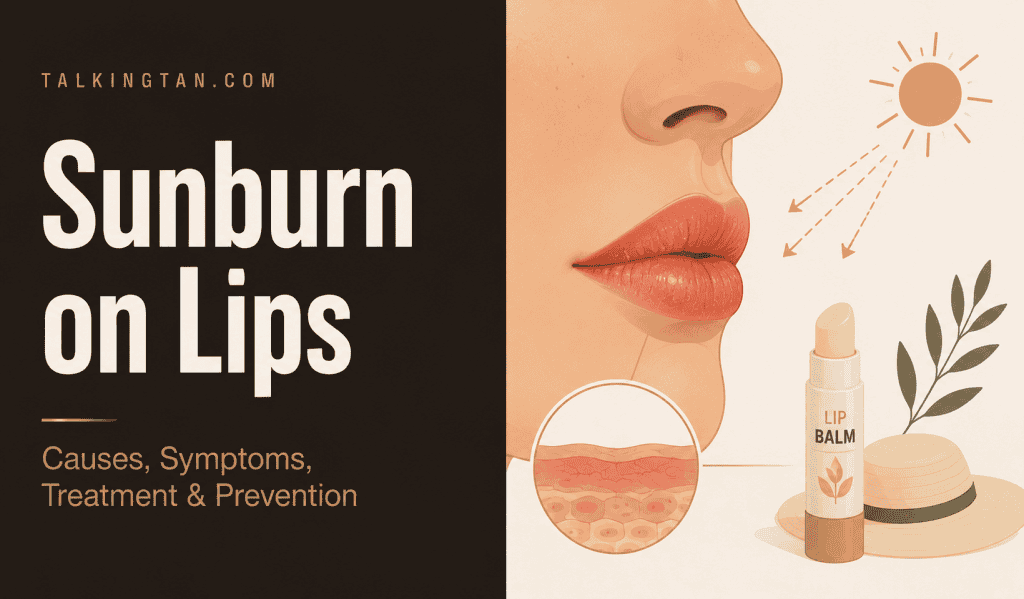
Sunburn on your lips can make them feel hot, tight, swollen, dry, and painful. In a more severe burn, lips may blister, crack, or peel. The safest response is to get out of the sun, cool the area gently, use a simple non-irritating ointment or lip product, and avoid picking at the skin.
Seek medical advice promptly if you have large blisters, severe swelling, signs of infection, eye symptoms, or feel unwell with fever, vomiting, dizziness, or dehydration. Lips can burn just like other exposed skin, and a severe reaction deserves proper care.
Key Takeaways
- Lips can sunburn because they are exposed skin and are easy to miss when applying sun protection.
- Symptoms can include pain, redness or color change, swelling, dryness, peeling, and blisters.
- Cool the lips gently, stay hydrated, and stop further sun exposure while they heal.
- Use a plain, fragrance-free lip ointment or white petroleum jelly if it feels comfortable; stop any product that burns or stings.
- Do not peel, bite, or pop blisters on sunburned lips.
- For prevention, use broad-spectrum SPF 30+ lip balm and reapply after eating, drinking, swimming, sweating, or licking your lips.
What does sunburn on lips look and feel like?
A lip sunburn can look redder or darker than usual, but color changes may be less obvious on some skin tones. The more reliable clues are how the lips feel: heat, stinging, tenderness, tightness, swelling, dryness, and later flaking or peeling.
With a more severe burn, small fluid-filled blisters can form. Sunburn is an acute inflammatory reaction to excessive UV exposure, and severe sunburn may involve blisters. [Guerra and Crane, StatPearls, 2026]
Sunburn on lips timeline: what to expect
Lips can feel dry or tender shortly after strong sun exposure, but the full reaction may develop over the next day. Swelling, cracking, or peeling can follow as the surface begins to heal. A severe burn may blister and take longer to settle.
- First few hours: stinging, warmth, dryness, and tenderness may appear.
- First day or two: swelling, tightness, stronger pain, and sometimes blisters can develop.
- Several days later: dry flakes and peeling may appear as damaged surface skin sheds.
- After the pain settles: lips can remain easily irritated and more sensitive to sun, wind, salty foods, and strong products for a while.
The trend matters more than a fixed number of days. A mild burn should gradually improve. Increasing swelling, pain, drainage, or a new widespread rash is not a routine healing pattern.
What to do for sunburned lips
Get out of the sun
Move indoors or into deep shade as soon as you notice burning. Avoid direct sun while your lips heal, and use a wide-brimmed hat if you must be outdoors.
Cool the area gently
Hold a clean, cool damp cloth against the lips for short periods. Avoid ice directly on the lips, which can make already damaged skin more uncomfortable.
Use a simple, non-irritating barrier
Plain white petroleum jelly or a fragrance-free lip ointment can help reduce dryness and friction for some people. Keep it simple: avoid lip plumpers, strong flavors, mint, menthol, fragrance, exfoliating acids, and products that sting. Burning or tingling is not a sign that a lip product is “working.”
Drink fluids and avoid picking
Drink water regularly, especially after a hot day outdoors. Do not lick, bite, scrub, or peel your lips. That can make cracking worse and disturb skin that is trying to heal.
Make eating and drinking more comfortable
Choose cool drinks and softer foods if your lips feel cracked or swollen. Very hot drinks, spicy foods, citrus, and salty foods can sting broken skin, so it may help to avoid them temporarily. Use a straw only if it is comfortable and does not rub the sore area.
Which lip products are best while lips heal?
Look for a bland, fragrance-free balm or ointment that does not sting. White petroleum jelly, dimethicone, ceramides, mineral oil, or shea butter are commonly used in simple protective lip products. Apply with clean hands and replace a product if it starts to smell, change texture, or seems contaminated.
Skip products with strong flavoring, fragrance, peppermint, menthol, camphor, eucalyptus, or exfoliating acids while the lips are raw. Products marketed as plumping, tingling, cooling, or long-wear can be uncomfortable on a damaged lip barrier.
Can you put sunscreen on sunburned lips?
While the lips are actively painful, cracked, or blistered, focus first on getting out of the sun and physically protecting them with shade and a hat. Once they are comfortable enough for a product, use a lip balm that feels non-irritating and has broad-spectrum SPF 30 or higher when you go outside.
Apply lip SPF before exposure and reapply after eating, drinking, swimming, sweating, or licking your lips. Standard face sunscreen can be unpleasant to taste and may not stay on lips well, so a product made for lips is usually more practical.
What not to do
- Do not pop a blister or pull off peeling skin.
- Do not use toothpaste, butter, alcohol-based products, or strongly fragranced lip treatments.
- Do not use a lip scrub or exfoliating treatment until the skin is fully healed.
- Do not keep exposing the lips to direct sun in the hope that the burn will “turn into a tan.”
Is it definitely a lip sunburn?
Sunburn is likely when symptoms follow a clear period of sun exposure and involve exposed lip skin along with other sun-exposed areas. But not every painful or blistered lip is a sunburn. Cold sores, allergic reactions, irritation from a lip product, infection, and other skin conditions can look similar.
Ask a clinician or pharmacist if you develop grouped painful blisters, a crust that keeps returning, a rash after a new lip product, or burning after only brief sun exposure. Some medicines can cause photosensitivity reactions after UV exposure, so a sudden unusually strong reaction is worth discussing with a prescriber or pharmacist. [Blakely et al., Drug Safety, 2019]
When to see a doctor
Contact a healthcare professional promptly for large or painful blisters, severe swelling, worsening pain, pus, spreading redness, fever, chills, nausea, eye pain, or vision changes. Seek urgent care if you have confusion, fainting, repeated vomiting, trouble breathing, or signs of serious dehydration.
Also get advice if you have a persistent scaly, crusted, bleeding, or non-healing lip patch. That is not something to assume is a routine sunburn.
How long does a lip sunburn last?
A mild burn often starts improving over several days. Peeling can occur as the top layer of damaged skin sheds. A blistering or very swollen burn may take longer, and symptoms should gradually improve rather than worsen.
If your lips are becoming more painful, more swollen, or show signs of infection, seek medical advice rather than waiting for a fixed number of days.
How to protect sunburned lips when you need to go outside
Physical shade is the first choice while lips are sore. Wear a wide-brimmed hat and seek shade whenever possible. Once the lips are not open or actively blistered and can tolerate a product, use a broad-spectrum SPF 30+ lip balm. Reapply after eating, drinking, swimming, sweating, or licking your lips.
Remember that a face sunscreen is not always a good replacement for lip SPF: it can taste unpleasant, wear away quickly around the mouth, and may sting cracked lips. A lip product designed for the job is usually easier to use consistently.
How to prevent sunburn on lips
Use a broad-spectrum SPF 30+ lip balm every day you will be outside, including cloudy or cool days. Reapply it frequently because food, drinks, talking, sweat, and lip licking all reduce coverage. A hat adds important shade to the whole face.
Cloud cover is not dependable protection; our guide to tanning when it is cloudy explains why. Checking the UV index before outdoor plans can also help you decide when to add shade and protective clothing.
For broader SPF guidance, read can you tan with sunscreen?. If you are trying to avoid further darkening, see our guide to sunblock options to prevent tanning.
Frequently Asked Questions
Can lips get sunburned through lip balm?
Yes. A lip balm without SPF does not provide reliable UV protection. Even SPF lip balm needs generous application and frequent reapplication after eating, drinking, swimming, sweating, and licking your lips.
Should I peel the skin off sunburned lips?
No. Let the skin shed on its own. Picking or peeling can cause cracking, bleeding, irritation, and a longer healing process.
Can sunburn on lips cause a cold sore?
Sun exposure can trigger cold sore outbreaks in people who are prone to them. If you develop clusters of painful blisters, have recurrent outbreaks, or are unsure whether it is a cold sore or a burn, ask a clinician or pharmacist for advice.
Can I use aloe vera on sunburned lips?
A simple, fragrance-free product may feel soothing for some people, but stop using it if it stings. Avoid applying gels or creams inside the mouth, and choose a simple lip-safe ointment if the skin is cracked or very dry.
Can I wear lipstick on sunburned lips?
It is best to wait until the lips are no longer tender, cracked, or peeling. Long-wear, matte, fragranced, and plumping formulas can be drying or irritating. When you return to lip color, choose a gentle product and stop if it stings.
Why are my lips swollen after being in the sun?
Swelling can happen with an inflammatory sunburn. However, rapid or severe swelling, trouble breathing or swallowing, hives, or swelling beyond the lips needs urgent medical assessment because it may signal an allergic reaction or another problem.
Final Thoughts
Sunburned lips need gentle care and a break from UV exposure. Cool them, avoid irritating products and picking, and use SPF lip balm plus shade once they are comfortable enough. Get medical advice for significant blistering, swelling, infection signs, or whole-body symptoms.
References
Sunburn clinical overview:
Guerra KC, Crane JS, 2026, StatPearls, “Sunburn”
Clinical overview of UV-related sunburn, including symptoms, severity, and general assessment.
Medication-related photosensitivity:
Blakely KM et al., 2019, Drug Safety, “Drug-Induced Photosensitivity—An Update: Culprit Drugs, Prevention and Management”
Review of medication-associated photosensitivity, including prevention and clinically established examples.