
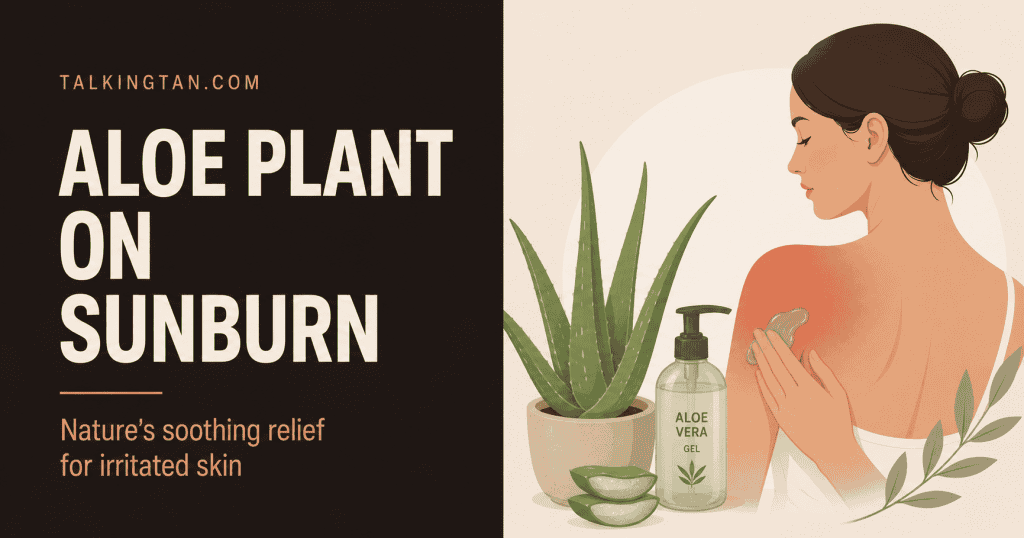
You can use aloe gel from an aloe plant on a mild sunburn if your skin is intact and you know you tolerate it, but it is not a replacement for cooling the skin, avoiding more UV exposure, or getting care for a severe burn. Fresh aloe can feel soothing, yet it is not sterile and the yellow sap just under the leaf skin can irritate some people.
For blistered, open, infected-looking, or widespread sunburn, skip DIY plant treatments and seek medical advice. If you use aloe, keep it simple: use only clear inner gel, patch-test it first, and stop if it burns, itches, or makes the rash worse.
Key Takeaways
- Fresh aloe gel may feel cooling on mild, intact sunburned skin.
- It does not prevent UV damage, replace sunscreen, or make it safe to return to the sun.
- Aloe research for burns is mixed and does not prove that fresh plant gel reliably treats every sunburn.
- Use only the clear inner gel, avoid the yellow latex-like sap, and patch-test first.
- Do not apply fresh plant material to open blisters, weeping skin, or suspected infection.
Is aloe straight from the plant good for sunburn?
It can be soothing for some people with a mild burn, mainly because cool gel and gentle moisture can make hot, tight skin feel more comfortable. But “natural” does not automatically mean risk-free or proven. Plant gel varies, fresh-cut leaves are not sterile, and some people develop irritation or an allergic reaction.
A recent meta-analysis of burn studies found possible healing benefits from topical aloe, but its pain-relief benefit was uncertain and the evidence was not specific to every type of sunburn or fresh home-harvested gel. [Huang et al., Journal of Burn Care & Research, 2024]
How to use aloe plant gel on a mild sunburn
1. Cool the skin first
Get out of the sun. Use a cool shower, bath, or clean damp cloth, then pat the skin dry. Aloe is an optional comfort step, not the first or only treatment.
2. Use the clear inner gel only
Wash the outside of the leaf and your hands. Cut the leaf open, let the yellow sap drain away, and use only the clear inner gel. Avoid rubbing in pieces of leaf skin or yellow liquid, which may be irritating.
3. Patch-test before covering a large area
Put a small amount on unbroken skin away from the burn and wait to see whether you get itching, stinging, hives, or extra redness. If you react, wash it off and do not use it again.
4. Apply a thin layer to intact skin
Use gentle hands and do not scrub. Stop if it stings. Keep the rest of your routine simple and avoid layering fragranced oils, exfoliants, or multiple “after-sun” products on top.
Fresh aloe vs. bottled aloe gel
Fresh aloe is appealing because you know it came from a plant, but it can be messy, variable, and more likely to include irritating leaf sap. A simple fragrance-free commercial gel can be more practical for some people, but check the label: many products called “aloe” also contain alcohol, fragrance, color, or cooling additives that can sting sunburned skin.
Choose the option that is simple, non-irritating, and used only on intact skin. If neither feels comfortable, a bland fragrance-free moisturizer is a reasonable alternative.
How to store fresh aloe gel
Fresh-cut gel does not have the preservatives or standardized packaging of a commercial product. Make only a small amount, keep it clean, and discard it if it changes smell, color, or texture. Do not share a container that has touched irritated skin. Refrigerated gel may feel soothing, but extreme cold is not necessary and frozen chunks should not be pressed directly onto burned skin.
Can aloe cause an allergic reaction?
Yes. Stop using it and wash the area with cool water if you develop itching, hives, new rash, burning, swelling, or worsening redness. Get urgent help for swelling of the lips or tongue, breathing difficulty, or widespread hives. A patch test lowers the chance of covering a large burned area with a product that does not agree with your skin.
When not to use aloe plant on sunburn
- Large blisters, open skin, weeping skin, pus, or spreading redness
- Severe pain, fever, chills, vomiting, dizziness, or dehydration
- Known aloe allergy or a reaction during patch testing
- Burns on a baby or young child without clinical advice
- Sunburn in or near the eyes, lips, or other sensitive mucosal areas
A small sunburn trial of an aloe cream did not show meaningful prevention or treatment benefit compared with placebo, which is a useful reminder not to oversell it. [Puvabanditsin and Vongtongsri, Journal of the Medical Association of Thailand, 2005]
What actually helps a sunburn?
The basics are more important than any one plant: get out of the sun, cool the skin gently, drink fluids, use a simple moisturizer if the skin is intact, and do not pop blisters or pick peeling skin. Seek medical care for serious symptoms.
Our guide to tanning with sunscreen explains why SPF still matters, while this cloudy-day guide covers a common way people get caught out.
Can aloe prevent peeling?
No. Aloe may make skin feel less dry, but it cannot stop the body shedding UV-damaged surface skin. Do not scrub or pull flakes away to make peeling finish faster. Let the area recover naturally and protect it from further sun.
Can you put aloe on a blistering sunburn?
Do not put fresh plant gel directly on broken blisters or open skin. Blistering means the burn is more serious and may need assessment, especially when widespread or painful. Keep blisters intact, avoid friction, and get clinical advice about proper wound care.
How to prevent the next sunburn
Aloe is aftercare, not sun protection. Use broad-spectrum, water-resistant sunscreen with SPF 30 or higher, apply enough, and reapply at least every two hours outdoors or after swimming, sweating, and towel drying. Add shade, hats, and sun-protective clothing.
Check the UV index before long outdoor plans. If your priority is preventing further tanning, review sunblock options to prevent tanning.
Frequently Asked Questions
Can I leave aloe vera gel on sunburn overnight?
If you have patch-tested a simple product and it does not sting, a thin layer on intact skin may be comfortable. Wash it off if it becomes sticky, irritating, or traps heat. Do not cover a serious blistering burn with fresh plant material overnight.
Can I put aloe plant gel on my face after sunburn?
Only on intact skin and away from the eyes, lips, and nostrils. Patch-test first, because facial skin can be sensitive. Seek advice for eye symptoms, significant swelling, or blistering.
Does aloe vera replace moisturizer after sunburn?
Not necessarily. Aloe may be soothing, but a simple fragrance-free moisturizer may work just as well for comfort. Choose the option your skin tolerates.
Does aloe prevent a sunburn?
No. Aloe is not sunscreen and should not be used before sun exposure in place of a broad-spectrum SPF product, clothing, and shade.
Final Thoughts
Fresh aloe plant gel can be a reasonable comfort measure for a small, mild, intact sunburn—but it is not a cure and it is not right for every burn. Use clear gel carefully, avoid the yellow sap and broken skin, and get medical help for blistering, infection signs, or whole-body symptoms.
References
Aloe and burn healing:
Huang YN et al., 2024, Journal of Burn Care & Research, “Effects of Aloe vera on Burn Injuries: A Systematic Review and Meta-Analysis of Randomized Controlled Trials”
Meta-analysis of burn studies finding potential healing benefits but uncertain pain relief.
Aloe cream and experimental sunburn:
Puvabanditsin P, Vongtongsri R, 2005, Journal of the Medical Association of Thailand, “Efficacy of Aloe vera Cream in Prevention and Treatment of Sunburn and Suntan”
Small randomized trial that did not find a meaningful sunburn-prevention or treatment benefit over placebo.