
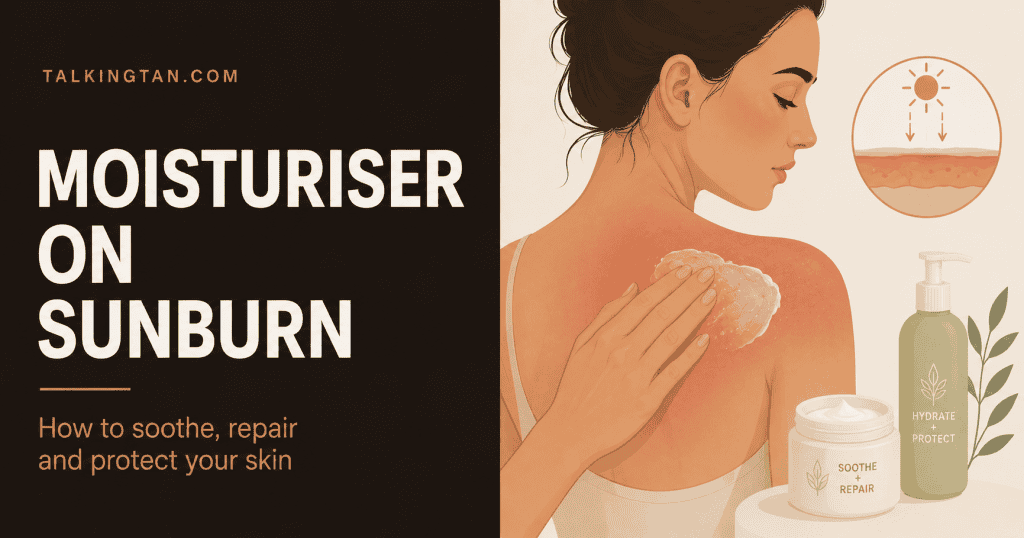
Yes, moisturizer can help a mild sunburn feel less dry, tight, and uncomfortable—but it does not reverse UV damage or make it safe to go back into the sun. The best time to apply it is after gently cooling the skin, while it is still slightly damp.
Use a simple, fragrance-free moisturizer on intact skin. If you have large blisters, open or weeping skin, severe pain, fever, nausea, dizziness, or signs of infection, get medical advice instead of layering on more products.
Key Takeaways
- Moisturizer can ease dryness and tightness from a mild sunburn but does not heal UV damage instantly.
- Cool the skin first, pat dry, then apply a simple fragrance-free lotion, cream, or gel.
- Aloe vera or soy-containing moisturizers may feel soothing; stop any product that stings.
- Avoid exfoliants, retinoids, strong fragrance, alcohol-heavy products, and numbing creams on sunburned skin.
- Do not use moisturizer as a substitute for medical care when blisters are widespread or you feel unwell.
Should you put moisturizer on sunburn?
For a mild burn with intact skin, yes. Moisturizer supports comfort by reducing dryness and the tight feeling that often follows sun exposure. It is part of aftercare, not a cure: it cannot undo the UV injury, prevent peeling completely, or make tanning safe.
Sunburn is an acute inflammatory reaction to excessive UV exposure; supportive care focuses on comfort while the skin recovers. [Guerra and Crane, StatPearls, 2026]
How to apply moisturizer to sunburned skin
1. Get out of the sun
Move indoors or into deep shade. Further UV exposure adds to the injury, so this step matters more than which lotion you choose.
2. Cool the skin gently
Take a cool shower or bath, or use a clean cool damp cloth. Avoid ice directly on the skin, very hot water, rough towels, and scrubbing.
3. Pat dry and moisturize while skin is slightly damp
Pat rather than rub. Smooth on a thin, even layer of moisturizer with gentle hands. Reapply when the skin feels dry or tight instead of applying a thick layer once and forgetting about it.
4. Keep the routine simple
Use one bland product at a time. If it burns, stings, or makes redness worse, rinse it off and stop using it. New fragrance, botanical blends, and “active” treatments can irritate a compromised skin barrier.
What moisturizer is best for sunburn?
Look for a fragrance-free moisturizer that feels comfortable on your skin. Lotions are light and easy for large areas; creams are often more cushioning for dry patches; a simple gel may feel cooling. Some people find aloe vera or soy-containing moisturizers soothing.
Avoid products with strong fragrance, alcohol, scrubs, exfoliating acids, retinoids, menthol, camphor, or numbing ingredients such as benzocaine unless a clinician has specifically advised their use. If you have sensitive skin, patch-test a new product on unburned skin first.
Lotion, cream, gel, or ointment?
There is no single best texture for everyone. A light lotion or gel can feel comfortable on a large warm area such as the shoulders or back. A fragrance-free cream may feel better on very dry, flaky spots. If you use an ointment, choose a simple one and apply it sparingly to intact skin; stop if it feels too heavy, traps heat, or irritates you.
Face skin may need a lighter, non-comedogenic formula, while body skin may tolerate a richer cream. Keep products away from eyes, lips, and broken skin unless they are specifically made and advised for those areas.
Can you use moisturizer on peeling sunburn?
Yes, moisturizer can be especially useful once a burn starts to peel. Apply it gently and let loose skin shed on its own. Do not scrub, exfoliate, dry brush, wax, or pull flakes away to “speed up” the process.
Keep the focus on gentle moisture and protecting the area from further sun. If the burn is blistered, open, or worsening, get medical advice rather than adding more skincare products.
When should you not use moisturizer on a sunburn?
Do not treat a significant blistering or open burn like ordinary dry skin. If the skin is weeping, has large blisters, or looks infected, seek medical advice about appropriate wound care. Also get help if you develop fever, chills, nausea, severe pain, dizziness, dehydration, pus, or spreading redness.
If you have a second-degree sunburn, avoid popping blisters. A clinician can advise you when a specific dressing or treatment is appropriate.
Does moisturizer stop sunburn peeling?
No. It may make peeling less uncomfortable by reducing dryness and tightness, but it cannot stop the body from shedding UV-damaged surface skin. The goal is to make recovery more comfortable and prevent you from picking at fragile skin.
How long should you moisturize after sunburn?
Continue until the skin is no longer dry, tight, tender, or flaky. If the burn is improving, you can usually return gradually to your ordinary body-care routine after peeling and sensitivity have settled. Delay scrubs, retinoids, and hair removal until the skin feels normal again.
A simple morning-and-evening routine for peeling sunburn
In the morning, rinse or shower with cool-to-lukewarm water, pat dry, and apply a gentle moisturizer. Cover the area with clothing or shade if you are going outside. In the evening, repeat the gentle cleanse only if needed and reapply moisturizer. Avoid long hot showers, baths, and vigorous towel drying, which can make dryness worse.
If you develop blisters, do not continue treating the area as normal dry skin. Keep the blisters intact and ask a healthcare professional if they are large, painful, open, or in a sensitive location.
How to prevent needing after-sun moisturizer
Prevent the burn in the first place: use broad-spectrum, water-resistant SPF 30 or higher, apply enough, and reapply at least every two hours outdoors or after swimming, sweating, and towel drying. Add shade, hats, and protective clothing.
Clouds can still allow enough UV for a burn, as our guide to tanning when it is cloudy explains. Check the UV index and review how sunscreen affects tanning before long outdoor days. If you want to limit visible tanning too, see sunblock options to prevent tanning.
Frequently Asked Questions
Can I use body butter on sunburn?
A simple moisturizer is usually the safer starting point. Very rich, heavily fragranced, or active-filled body butters may feel uncomfortable on hot, inflamed skin. Choose a bland fragrance-free product and stop if it stings.
Can I moisturize sunburn right away?
Cool the skin first, then apply a gentle moisturizer while it is slightly damp. The most urgent step is getting out of the sun; moisturizer comes after that.
Can moisturizer make sunburn worse?
It can if the product irritates your skin or if it is used on open or infected-looking areas without medical advice. Stinging, increasing redness, or a rash are signs to stop and use a simpler approach.
Final Thoughts
Moisturizer is useful after a mild sunburn because it reduces dryness and discomfort, especially after a cool shower. Keep the formula simple, avoid irritating ingredients, and seek medical help for blistering, infection signs, or whole-body symptoms.
References
Sunburn clinical overview:
Guerra KC, Crane JS, 2026, StatPearls, “Sunburn”
Clinical overview of UV-related sunburn and general supportive management.