
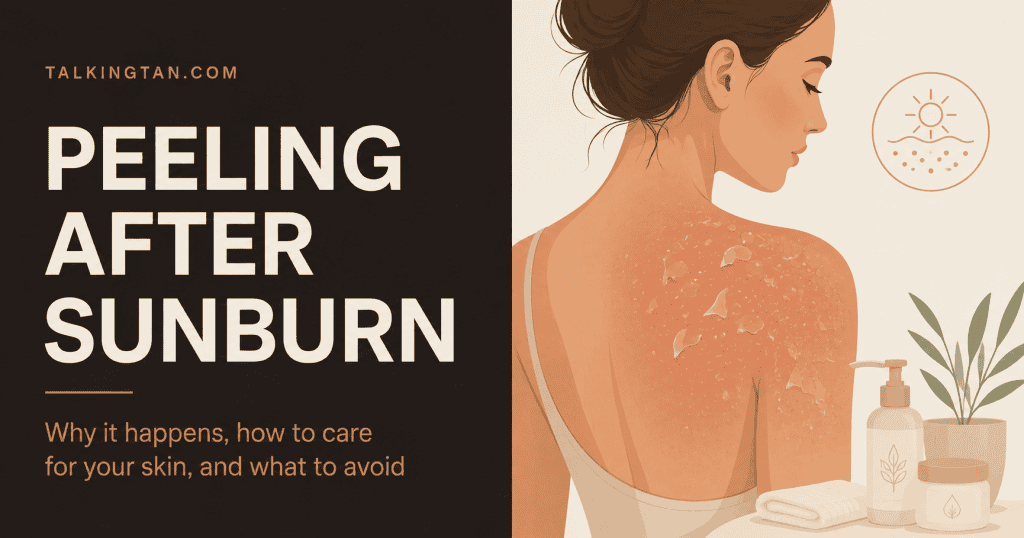
Peeling after a sunburn is your body shedding the top layer of UV-damaged skin. It often begins a few days after the burn and can be itchy, dry, and frustrating, but it is not a sign that the skin is “detoxing” or that you should scrub the flakes off.
The best approach is gentle: stop further sun exposure, cool and moisturize the skin, avoid picking, and watch for warning signs such as severe pain, blisters, pus, fever, or peeling with a widespread rash. Those symptoms need medical advice rather than more home remedies.
Key Takeaways
- Sunburn peeling usually starts several days after exposure as damaged surface skin sheds.
- Do not pull, scrub, exfoliate, or use a peel to remove the loose skin faster.
- Use cool water, gentle cleansing, and a simple fragrance-free moisturizer while the area heals.
- Stay out of direct sun or cover the area; new skin is vulnerable to further irritation.
- Do not use harsh actives, alcohol-based products, or fragranced treatments on peeling sunburn.
- Seek medical advice for large blisters, worsening pain, infection signs, fever, dehydration, or peeling that is severe or unexplained.
Why does skin peel after sunburn?
UV exposure injures skin cells. As the skin starts to repair itself, the damaged outer layer loosens and sheds. That is why peeling commonly starts after the initial redness, heat, and tenderness have already appeared.
UV exposure can trigger acute sunburn, and the body later sheds damaged surface skin as part of the healing process. [Guerra and Crane, StatPearls, 2026]
Peeling is common after a mild-to-moderate burn, but it does not make the original UV damage harmless. The priority is helping the skin barrier recover and preventing another burn.
When does skin start peeling after sunburn?
Sunburn symptoms often build over the first day. Skin can feel warm, tight, tender, itchy, or swollen before any visible flakes appear. Peeling usually starts a few days later, once the body begins to clear damaged surface skin. The exact timing varies with the strength of the exposure, the body area, and your individual skin response.
Shoulders, chest, back, nose, scalp, and thighs often peel because they are easy to expose for long stretches. The flakes may be fine and powdery or come away in larger sheets. Either way, resist the urge to pull at the edges.
A simple healing timeline
- First several hours: redness or a color change, warmth, tenderness, and swelling can develop.
- First 24 to 48 hours: pain and tightness may become more noticeable; a severe burn may blister.
- Several days later: the damaged outer layer starts to loosen and peel. Itching can increase as newer skin recovers underneath.
- After peeling settles: the area may remain drier, more sensitive, or temporarily uneven in color. Continue protecting it from UV.
How to care for peeling skin after sunburn
Keep it cool and gentle
Take cool or lukewarm showers and use a mild cleanser if needed. Pat the skin dry instead of rubbing with a towel. A clean cool damp cloth can relieve discomfort without pulling at loose skin.
Moisturize regularly
Apply a simple fragrance-free moisturizer after bathing while the skin is still slightly damp, then reapply whenever it feels dry or tight. An aloe or soy-based moisturizer may feel soothing for some people, but stop using any product that stings or irritates.
Lotions are often comfortable for broad body areas; a fragrance-free cream or ointment may feel better on especially dry patches. Apply with flat, gentle hands rather than rubbing hard. If the skin is blistered, open, or weeping, do not assume a normal body lotion is appropriate—seek advice about wound care instead.
Leave peeling skin alone
Do not pick, peel, scrub, dry brush, wax, shave closely, or use an exfoliating acid on the area. It may look untidy, but removing skin before it is ready can cause soreness, bleeding, irritation, and uneven pigment changes.
Handle itch without scratching
Itch is common while peeling skin heals. Try a cool damp cloth, a cool shower, moisturizer, and loose breathable clothing before scratching. Keep fingernails short, especially at night. If itching is disrupting sleep or feels intense, ask a pharmacist or clinician whether an appropriate treatment is safe for you; do not layer multiple medicated products onto irritated skin without advice.
Protect it from the sun
Stay out of direct sun while the area heals. If you need to be outside, use loose protective clothing, shade, and a broad-spectrum sunscreen on intact skin. Do not apply sunscreen to broken or blistered skin unless a clinician has advised you to do so.
What not to put on peeling sunburn
Avoid harsh products that can further disrupt a damaged skin barrier. Skip scrubs, retinoids, exfoliating acids, alcohol-based toners, strong fragrance, essential oils, and treatments marketed as “peels.” Do not apply butter, toothpaste, or other home remedies that can irritate the skin or trap heat.
If a product burns or stings, rinse it off and return to a basic moisturizer. Simple and boring is often best while the skin heals.
When can you return to your normal skincare routine?
Wait until the skin no longer feels tender, raw, tight, or actively flaky before returning to exfoliants, retinoids, acne treatments, fragrance, self-tanning products, hair removal, or strong actives. Add one product back at a time and stop if it stings.
For the face, this may mean temporarily using only a gentle cleanser, a bland moisturizer, and daytime sun protection on intact skin. For the body, avoid body scrubs, exfoliating gloves, waxing, and close shaving until the surface has recovered.
Will peeling after sunburn leave dark or light marks?
After a burn, skin can look temporarily darker, lighter, redder, or more uneven than usual. This can be more noticeable and longer-lasting in deeper skin tones. Avoid picking and further sun exposure, because inflammation and UV can worsen uneven pigment.
Post-inflammatory pigment changes can occur after skin injury or inflammation, and UV exposure can contribute to these changes. [Yadav et al., Journal of Cutaneous Medicine and Surgery, 2026]
Most color changes improve with time, but persistent, rapidly changing, or concerning patches should be assessed by a dermatologist. Do not rush into bleaching products, strong acids, or at-home peels while the skin is still recovering.
Can you peel skin after sunburn faster?
You should not try to speed up peeling by pulling the flakes off. There is no safe shortcut that makes UV-damaged skin regenerate instantly, and forced peeling can leave the surface more raw and sensitive.
You can make the process less uncomfortable by moisturizing, avoiding friction, drinking fluids, and protecting the area from more UV. Let the skin shed on its own timeline.
When should you worry about peeling after sunburn?
Contact a healthcare professional if peeling comes with severe pain, widespread blisters, pus, increasing warmth or swelling, red streaks, fever, chills, nausea, eye symptoms, or a burn that is worsening rather than improving.
Also seek medical advice if the peeling is widespread without a clear sunburn, involves the mouth or eyes, or follows a new medication or skincare product. Other skin conditions can cause peeling and may need different treatment.
Normal peeling vs. signs to get checked
- Usually expected: dry flakes, mild itch, gradually fading redness, and steadily improving tenderness.
- Get advice: new or spreading blisters, severe swelling, worsening pain, pus, red streaks, fever, dizziness, or peeling that spreads well beyond the sun-exposed area.
- Seek urgent help: confusion, fainting, repeated vomiting, inability to drink fluids, breathing trouble, or signs of severe dehydration after heat and sun exposure.
How long does peeling after sunburn last?
Peeling often begins a few days after a burn and may continue while the top layer of skin sheds. A mild burn usually improves over several days, but a more severe burn can take longer.
Focus on the direction of change. Gradual improvement is reassuring; worsening pain, redness, swelling, drainage, or whole-body symptoms are not.
How to prevent peeling after sunburn next time
The reliable prevention is preventing the burn. Use broad-spectrum, water-resistant sunscreen with SPF 30 or higher, apply enough to cover exposed skin evenly, and reapply at least every two hours or after swimming, sweating, or towel drying. Use shade, hats, sunglasses, and protective clothing too.
Clouds do not guarantee protection. Read can you tan when it is cloudy? and check the UV index before longer outdoor plans.
If you have burned even though you were wearing SPF, our guide to tanning with sunscreen explains common application gaps. If you want to limit tanning as well as burning, see sunblock options to prevent tanning.
Frequently Asked Questions
Is peeling after sunburn a good sign?
It is a common part of the healing process, but it is not a sign that the burn was beneficial. It shows the outer layer of damaged skin is shedding after too much UV exposure.
Should I exfoliate peeling sunburn?
No. Avoid physical scrubs, exfoliating gloves, acids, retinoids, and picking until the skin is fully healed. Gentle moisturizer is the safer choice.
Can I put moisturizer on peeling sunburn?
Yes. A simple fragrance-free moisturizer can reduce dryness and tightness. Apply gently, and stop if the product stings or causes irritation.
Why is my peeling sunburn so itchy?
Itching is common as the damaged surface layer loosens and new skin recovers underneath. Cool compresses, gentle moisturizer, and loose clothing can help. Get advice if the itch comes with a widespread rash, hives, blistering, or rapidly worsening swelling.
Does peeling mean a sunburn is gone?
Not necessarily. Peeling can happen while the skin underneath is still sensitive. Continue to protect the area from sunlight and avoid treating it like normal, fully healed skin until the tenderness and peeling have settled.
Can peeling sunburn cause skin cancer?
Peeling itself does not cause skin cancer, but the UV damage that caused the sunburn matters. Repeated sunburns are associated with higher melanoma risk. [Dennis et al., Annals of Epidemiology, 2008]
Can I self-tan while my sunburn is peeling?
Wait until the peeling, tenderness, and rough patches have settled. Self-tanner can cling unevenly to dry, shedding skin and may be irritating on a compromised skin barrier. A tan from UV exposure is not a safer workaround; protect the healing skin instead.
Final Thoughts
Peeling after sunburn is irritating, but aggressive fixes usually make it worse. Let the skin shed naturally, moisturize gently, avoid more UV exposure, and get medical advice for severe, infected-looking, or unexplained peeling. The best aftercare is slow, simple, and protective.
References
Sunburn clinical overview:
Guerra KC, Crane JS, 2026, StatPearls, “Sunburn”
Clinical overview of UV-related sunburn, including symptoms, severity, and general management.
Sunburn and melanoma risk:
Dennis LK et al., 2008, Annals of Epidemiology, “Sunburns and Risk of Cutaneous Melanoma: Does Age Matter? A Comprehensive Meta-analysis”
Meta-analysis finding an association between increasing numbers of sunburns and melanoma risk across life stages.
Post-inflammatory pigment changes:
Yadav G et al., 2026, Journal of Cutaneous Medicine and Surgery, “A Review of Post-Inflammatory Pigmentation Changes: Pathophysiology, Diagnosis and Treatment”
Review of pigment changes that can follow skin injury or inflammation and the contribution of UV exposure and inflammatory pathways.