
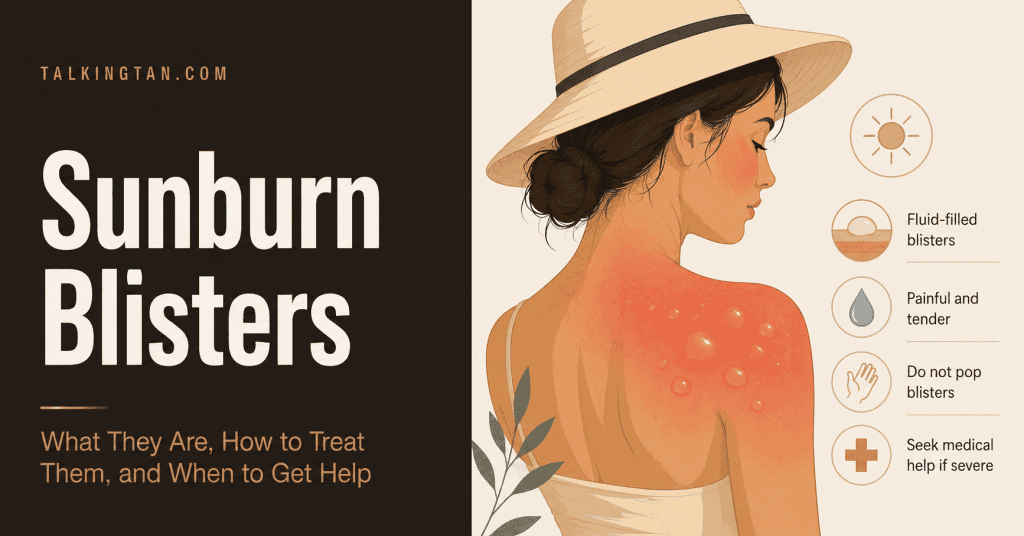
Sunburn blisters are a sign that the burn is more serious than simple redness. They can develop hours to days after too much UV exposure and usually mean the top layers of skin have been injured enough to separate and fill with fluid.
The first rule is simple: do not pop the blisters yourself. Get out of the sun, cool the skin gently, keep the area clean, and protect it from rubbing. Large blisters, severe pain, fever, dehydration, or blisters on the face, hands, genitals, or a large area of skin are reasons to contact a healthcare professional.
Key Takeaways
- Blistering after a sunburn generally signals a second-degree burn and deserves more care than a mild red burn.
- Leave blisters intact where possible. The blister roof helps protect the raw skin beneath it.
- Cool the area with a cool shower, bath, or damp cloth; do not apply ice directly to burned skin.
- Keep blisters clean and lightly protected from friction with a nonstick dressing if needed.
- If a blister breaks, do not peel off the loose skin. Clean it gently, protect it, and watch for infection.
- Get medical advice for large or very painful blisters, blisters on the face, hands, or genitals, and for burns in babies or young children.
- Seek urgent care for confusion, fainting, trouble breathing, repeated vomiting, severe dehydration, or a high fever.
- Avoid further sun exposure while the skin heals. A blistering burn is not something to tan over.
What do sunburn blisters mean?
A blister forms when damaged layers of skin separate and fluid collects between them. With sunburn, blistering is commonly treated as a second-degree burn. The skin may be intensely red, hot, swollen, painful, and later begin to peel.
Sunburn is an acute inflammatory skin reaction after excessive UV exposure, and more severe burns may blister. [Guerra and Crane, StatPearls, 2026]
Blisters can appear several hours after the exposure, so it is possible to feel merely sore at first and wake up with a more obvious burn the next day. Do not judge the severity only by how the skin looked immediately after being outside.
What to do for sunburn blisters
Get out of the sun and stop further exposure
Move indoors or into deep shade. Keep the burned area out of direct sun until it heals; extra UV exposure can worsen pain and delay recovery. Loose, soft clothing can help prevent rubbing if you need to be outside.
Cool the skin gently
Use a cool shower, cool bath, or clean damp cloth for short periods. The goal is comfort, not extreme cold. Avoid applying ice directly to burned skin, as that can add irritation to already damaged tissue.
Leave the blister alone
Do not pop, puncture, drain, or peel a sunburn blister at home. The intact skin on top acts as a natural cover for the raw area beneath it and can help reduce the chance of infection.
Burn-blister management needs to account for infection risk, healing, comfort, and the specific wound; this is why large or complicated blisters are best assessed by a clinician. [Sargent, Journal of Burn Care & Research, 2006]
Keep it clean and protect it from friction
If the blister is likely to rub against clothing or bedding, loosely cover it with a sterile, nonstick bandage. Avoid adhesive directly on the blister itself. Keep the area clean, and avoid products that sting, dry the skin, or add irritation.
Hydrate and manage discomfort carefully
Drink extra fluids if you are able to keep them down. A sunburn can contribute to dehydration, especially after a hot outdoor day. An over-the-counter pain reliever may help some adults when used exactly as directed on the label; check with a pharmacist or clinician first if you are pregnant, treating a child, have a medical condition, or take other medicines.
What if a sunburn blister pops?
Blisters sometimes break on their own. If that happens, do not tear off the remaining skin. Wash your hands, then gently rinse the area with mild soap and water. Pat it dry, apply a thin layer of plain petroleum jelly if it suits you, and cover it with a sterile nonstick dressing.
Change the dressing if it becomes wet or dirty. Seek medical advice if the skin becomes increasingly red, warm, swollen, painful, or starts draining pus, or if you develop a fever. These can be signs of an infection.
When to see a doctor for sunburn blisters
Do not wait it out if the burn looks extensive or you feel unwell. Contact a healthcare professional promptly for:
- Large, widespread, or severely painful blisters
- Blisters on the face, hands, feet, genitals, or over a major joint
- Increasing redness, pus, warmth, swelling, or red streaks around a blister
- Fever, chills, nausea, severe headache, or worsening pain
- Eye pain, light sensitivity, or vision changes after strong sun exposure
- A burn in a baby or young child
Seek urgent medical care now for:
- Confusion, fainting, seizures, or trouble staying awake
- Shortness of breath, rapid breathing, or chest pain
- Repeated vomiting or an inability to drink fluids
- Severe dehydration, such as extreme thirst, very little urine, or severe dizziness
- A fever of 103°F (39.4°C) or higher with vomiting, or other signs of heat illness
These symptoms can overlap with heat exhaustion or heatstroke and should not be managed as a routine sunburn at home.
How long do sunburn blisters take to heal?
Healing time depends on the size and depth of the burn, the body area involved, and whether the skin stays intact. A mild burn may settle over several days, while a blistering burn can take longer and may peel as it recovers.
The more useful measure is the trend: pain and redness should gradually improve, not worsen. If blisters spread, the pain increases, or the skin looks infected, get medical advice instead of waiting for a particular number of days.
What not to put on sunburn blisters
Avoid home remedies that can trap heat, contaminate the skin, or irritate a broken blister. Do not use butter, toothpaste, harsh exfoliants, alcohol-based products, or fragranced products on blistered skin. Do not apply topical antibiotics unless a clinician has told you to use one; some can irritate the skin or trigger an allergic reaction.
Keep the routine simple: cool water, gentle cleansing if the blister breaks, a nonstick dressing where needed, and protection from further sun.
How to prevent another blistering sunburn
Once skin has blistered, avoid direct UV exposure until it has healed. For future days outside, use broad-spectrum, water-resistant sunscreen with SPF 30 or higher, apply it generously before exposure, and reapply at least every two hours or after swimming, sweating, or towel drying.
Sunscreen is only one layer of protection. Check the forecasted UV index, use shade, and cover skin with clothing, a hat, and sunglasses. Our guide to the UV index and tanning explains why stronger conditions leave less room for mistakes.
Do not rely on clouds to prevent a burn. Read can you tan when it is cloudy? for the details. If you are confused about why you burned despite protection, see can you tan with sunscreen? and make sure you are applying and reapplying enough product.
If you want to avoid extra color while protecting your skin, our guide to sunblock options to prevent tanning can help you choose an appropriate product.
Frequently Asked Questions
Should you pop sunburn blisters?
No. Leave them intact where possible. The blister roof protects the exposed skin beneath it. If a blister is very large, very painful, or likely to rupture, ask a healthcare professional for advice rather than draining it yourself.
Can you shower with sunburn blisters?
Yes, but keep the water cool or lukewarm and avoid scrubbing. Pat the skin dry instead of rubbing it with a towel. If a blister has opened, gently clean it and use a nonstick dressing if it needs protection.
Do sunburn blisters scar?
Many superficial blistering burns heal without noticeable scarring, but deeper injuries, infection, picking, and repeated sun exposure can increase the chance of lasting marks or pigment changes. Let the skin heal and protect it from sun afterward.
Can I put aloe vera on sunburn blisters?
A simple, fragrance-free aloe gel may feel soothing on intact surrounding skin for some people. Avoid applying anything that stings or irritates, and do not use products with alcohol or heavy fragrance on broken blisters. When in doubt, use plain petroleum jelly on a broken area and ask a pharmacist or clinician for advice.
Why do I have blisters but not much pain?
Sunburn symptoms can develop over time, and pain varies by person and body area. Blistering still indicates a more serious burn, so protect the skin and seek advice if the area is large, painful, worsening, or accompanied by whole-body symptoms.
Final Thoughts
Sunburn blisters are your cue to slow down and protect the injury. Do not pop them, keep them clean, avoid more UV exposure, and get medical advice if the burn is large, in a sensitive area, infected-looking, or making you feel unwell. Preventing the next burn is just as important as caring for this one.
References
Sunburn clinical overview:
Guerra KC, Crane JS, 2026, StatPearls, “Sunburn”
Clinical overview of UV-related sunburn, its severity, and general assessment and management.
Burn blister management:
Sargent RL, 2006, Journal of Burn Care & Research, “Management of Blisters in the Partial-Thickness Burn: An Integrative Research Review”
Review of burn-blister care considerations, including infection, healing, comfort, and the need to tailor management to the individual wound.
Leave or debride burn blisters:
Murphy F, Amblum J, 2014, Emergency Nurse, “Treatment for Burn Blisters: Debride or Leave Intact?”
Literature review discussing the clinical trade-offs of leaving, draining, or debriding minor burn blisters.